Eight years of autonomy engineering, difficult-water perception and defense system integration are shaping Dubotech’s approach tosurveillance across sea, air and land.
Modern surveillance is no longer defined by a camera connected to a display. It requires sensors that can operate in difficult environments, software that can interpret incoming data and autonomous systems capable of responding to operational requirements.
Dubotech’s work in this field is built on more than eight years of hands-on experience in autonomous technology. The company’s technical foundation began with autonomous underwater systems developed for global robotics competitions, where vehicles were required to perceive their surroundings, navigate independently and complete defined tasks without direct human control.
That environment established the capabilities that continue to shape Dubotech’s defense work today: autonomous navigation, computer vision, sensor fusion, embedded control and real-time mission execution.
Solving One of the Hardest Visual Environments
Underwater perception is a difficult data problem. Murky water, low light, suspended particles, colour loss and visual distortion can significantly reduce the quality of information available to an autonomous system.
Working in these conditions required Dubotech’s engineers to go beyond conventional camera integration. Visual information had to be processed alongside navigation data and other sensor inputs so that the vehicle could understand its environment and continue operating when a clear optical image was not available.
This experience created a strong technical foundation for developing cameras, sensors and perception systems intended for demanding defense environments.
The same core capabilities now extend beyond underwater systems. Camera integration, edge processing, detection, tracking, sensor fusion and operator interfaces are being applied across naval, aerial and ground-based surveillance platforms.
Surveillance Across Every Domain
Naval surveillance may depend on electro-optical cameras, thermal imaging, radar, sonar and vessel data operating together. Aerial surveillance requires sensors and onboard processing that can deliver useful information while the aircraft is in motion. Ground surveillance must combine fixed or mobile sensors with reliable detection, tracking and operator awareness.
Dubotech works across these layers, from the sensor and embedded electronics to the software that processes information and the interface used by the operator.
This multi-domain capability allows surveillance systems to be developed around the operating environment rather than around a single camera or vehicle. Different sensors can be selected, integrated and calibrated according to the task, platform and conditions in which the system will operate.
The company’s work supports technologies used across the naval, aerial and ground forces of Bangladesh, with development focused on practical integration and operational reliability.
Building New Systems and Modernising Existing Ones
Defense organisations already operate cameras, vehicles, sensors and control systems that remain mechanically useful but are limited by ageing electronics, disconnected interfaces or outdated system. .
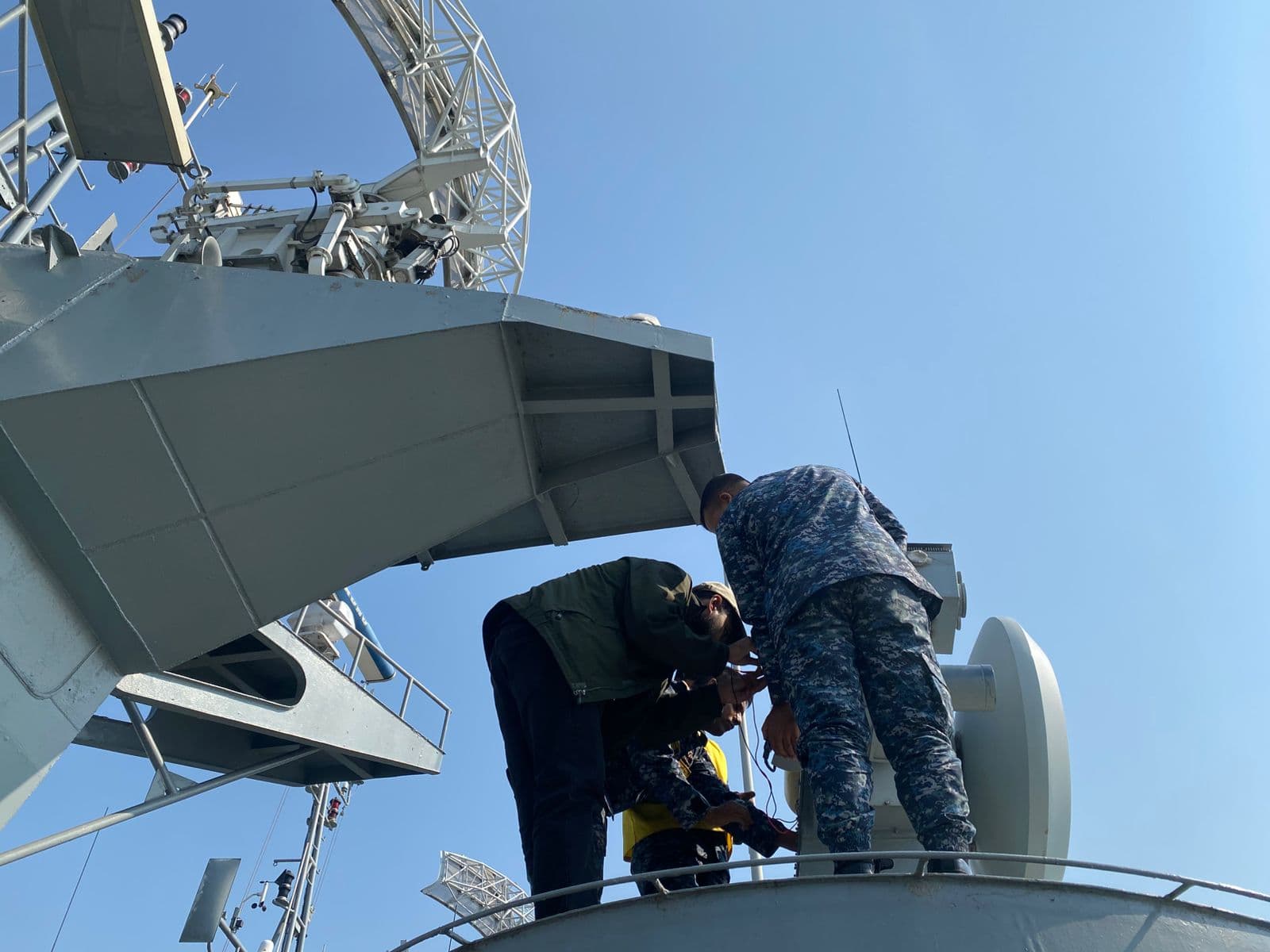
Dubotech’s role is not limited to developing new products. The engineering team also works with existing systems, restoring capability, upgrading components and integrating new cameras, sensors, communications and control functions.
This approach extends the operational value of fielded equipment while creating a path toward greater automation. A legacy platform can retain its core hardware while gaining modern sensing, onboard processing and improved operator control.
The same integration expertise applies to new autonomous products. Whether the platform operates underwater, in the air or on the ground, its sensors, onboard computing and control systems are developed as parts of one operational architecture.
Turning Surveillance into Autonomous Action
FORTIS provides the mission layer connecting these capabilities.
Sensor feeds, system status and tasking can be brought into a shared operating picture, allowing operators to supervise multiple assets through a common environment. Instead of treating each camera, sensor or unmanned vehicle as an isolated system, the platform connects them as part of one coordinated operation.
This is particularly important for autonomous surveillance. Detecting an event is only the first step. The system must also understand where it occurred, determine which asset can respond, assign the task and maintain operator oversight as the operation develops.
By connecting perception, autonomy and mission control, FORTIS turns surveillance data into coordinated action.
Dubotech’s surveillance capability is grounded in direct experience with autonomous systems and difficult operating environments. The company has worked on the complete technical chain: mechanical platforms, embedded electronics, cameras, sensors, AI, autonomy and mission software.
That foundation enables Dubotech to develop new surveillance technologies while also upgrading systems already in service. The future of surveillance will be autonomous, connected and increasingly multi-domain. Sensors will not operate alone, and unmanned platforms will not remain confined to separate control stations. They will share information, coordinate tasks and operate through a unified command environment.
Dubotech is building toward that future, combining years of autonomy engineering with defense-system integration to create surveillance capabilities across sea, air and land.
More field stories from Dubotech.
View all